Need help right now?
This information is general education only and is not a substitute for professional medical advice. If something here rings true for you, the best next step is a chat with your GP — and if you're in crisis right now, call Lifeline on 13 11 14, or 000 if life is in danger.
If you're not sure whether it's serious enough to get help, get help anyway.
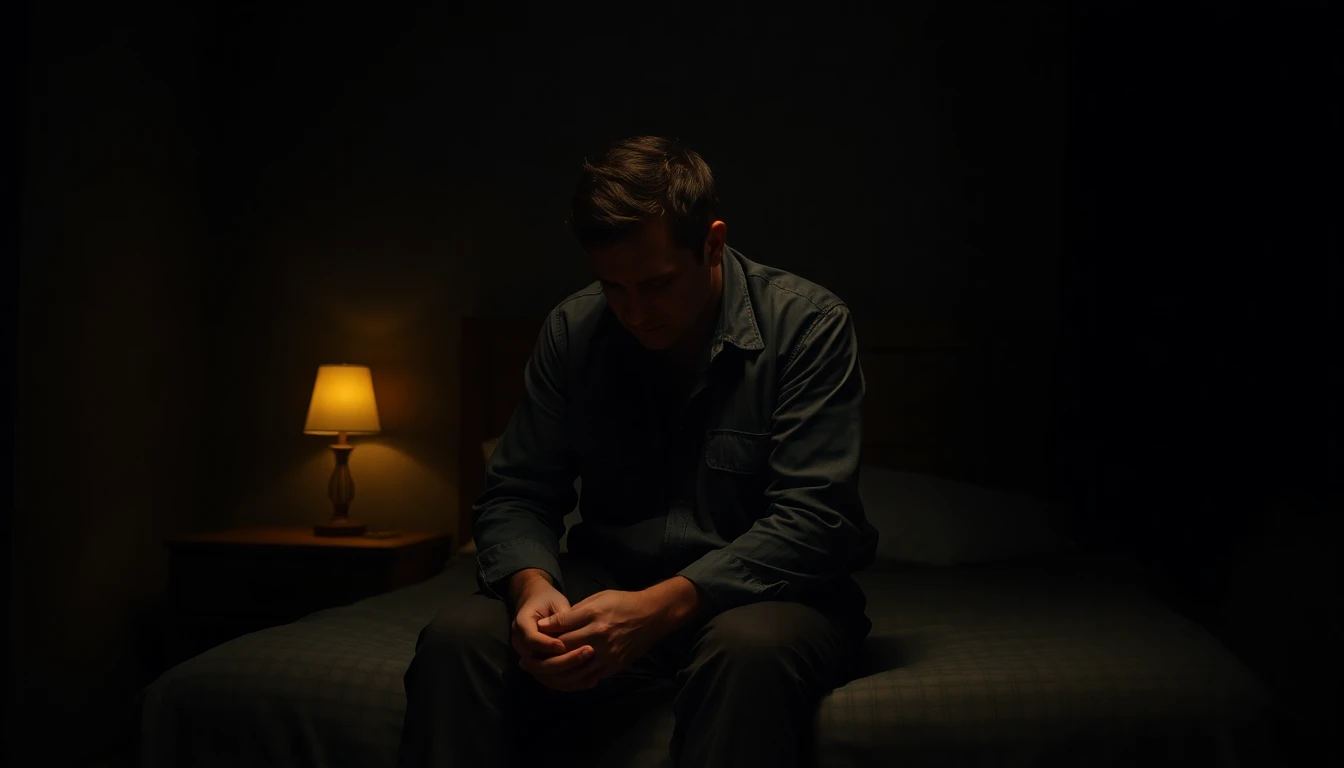
There's a feeling most blokes carry and almost none of us name. It's the voice that says you're not measuring up. Not "you stuffed that up" — worse than that. You are the stuff-up. Stay quiet about it, and whatever you do, don't let anyone see.
That's shame, and it's doing more damage to Australian men than almost anything else — because it's the feeling that stops us getting help for everything else. Beyond Blue has found that stigma and embarrassment are among the biggest reasons men don't reach out, even when they know something's wrong. Shame is the bouncer standing between blokes and the help that would actually work.
Here's the good news, and it's real: shame is not a fact about you. It's a feeling — a common, treatable, shrinkable feeling. And it has one well-known weakness, which this page is about.
What's actually going on?
First, a distinction worth its weight in gold: guilt and shame are not the same thing.
- Guilt says: "I did a bad thing." It points at your behaviour. Guilt can actually be useful — it's the nudge that makes you apologise, fix the mistake, do better next time. Guilt moves you.
- Shame says: "I am bad." It points at you — your whole self. Shame doesn't make you fix anything. It makes you hide. It convinces you that if people saw the real you — the debts, the drinking, the marriage trouble, the panic attacks, the failed business — they'd walk away.
Same mistake, two very different stories. One bloke misses his kid's footy final because of work and thinks, "That was a bad call, I'll make it right." Another thinks, "I'm a useless father." First bloke changes something. Second bloke pours a drink and goes quiet.
Key point: Guilt says “I did a bad thing” and points at what you did. Shame says “I am bad” and points at you. Guilt moves you; shame makes you hide.
Why do men carry so much of it? Most of us grew up on a short list of rules: be strong, be the provider, handle it yourself, don't whinge, don't cry. Useful rules for some moments. Brutal rules for others — because they make every normal human struggle feel like a personal failure. Lose your job and it's not "the economy" — it's you failed as a provider. Struggle with your mental health and it's not "something a huge number of Aussies face" — it's you're weak. MensLine hears these exact stories every day from blokes who waited years to make the call — not because help wasn't there, but because shame told them they didn't deserve it or shouldn't need it.
And here's the mechanism that matters: shame grows in silence and secrecy, and it shrinks when it's spoken. Every month you keep something hidden, shame compounds like interest. The moment you say it out loud to one safe person and don't get rejected — it loses altitude fast. That's not a slogan. It's the most reliable thing we know about how shame works, and it's why everything on this page points the same direction: out of the dark, gradually, on your terms.
Key point: Shame grows in silence and shrinks the moment you say it out loud to one safe person who doesn't walk away.
Signs to look for
Shame is sneaky — it rarely announces itself. It hides inside other behaviours. Have an honest look:
- A harsh inner commentary: "idiot", "useless", "weak", "failure" — words you'd never let anyone say about a mate
- Hiding things from your partner: debts, drinking, job trouble, how you're really feeling
- Never asking for help — at work, at home, anywhere — because needing help feels like failing
- Hating being seen to fail: avoiding new things you might be bad at
- Flaring up when criticised — even gentle feedback feels like an attack, because it confirms the inner verdict
- Replaying old embarrassments and failures at 2am, sometimes from decades back
- Perfectionism — flogging yourself to be beyond reproach so the "real you" stays covered
- Drinking, gambling, porn or endless scrolling to numb the feeling — followed by more shame about the numbing (the shame spiral)
- Pulling away from people when you're struggling — exactly when you need them most
- Putting off the GP, the dentist, the conversation — because someone might see what's really going on
If a few of these are familiar, you're not defective. You're a normal bloke running very old software. And software can be updated.

What to do right now
If shame has its hand around your throat today — after a blow-up, a relapse, a stuff-up, a rejection — here's what actually helps in the moment.
- Call MensLine on 1300 78 99 78. Free, 24/7, blokes who get it, and completely anonymous — which makes it the perfect first move when shame says "never tell anyone". You can say the thing out loud to someone safe, tonight, and nobody in your life needs to know. That phone call is shame's worst nightmare.
- Name it to tame it. Literally say to yourself: "This is shame." Not truth — shame. Naming the feeling moves your brain from drowning in it to looking at it. It sounds too simple. Try it.
- Run the mate test. Whatever you're saying to yourself right now — would you say it to your best mate if he'd done the same thing? You wouldn't. You'd say, "Mate, that's rough, but it doesn't make you a bad bloke." You're allowed the same treatment.
- Separate the deed from the bloke. On paper or in your head, finish two sentences: "What I did was..." and "What that doesn't make me is..." Guilt about the deed is workable. The verdict on your whole self is the part to put down.
- Don't disappear. Shame's number one instruction is withdraw. Do the opposite, even ten per cent: reply to the message, stay at the table, go to training anyway. Every time you stay connected while feeling shame, you teach your brain the threat isn't real.
What not to do: don't numb it. The drink, the punt, the 2am scroll — they mute shame for an hour, then hand it back bigger, with interest. That spiral is the whole game; refuse to play.
Key point: Shame grows in silence and shrinks the moment you say it out loud to one safe person who doesn't walk away.
What to do over time
Loosening shame's grip is genuinely doable. It's not about becoming shameless — it's about shame becoming a passing weather pattern instead of your climate.
- Practise small disclosures. You don't have to spill your guts to everyone. Pick one safe person and share one real thing: "Work's actually been flogging me lately." Watch what happens — almost always nothing bad, often something good. Each small reveal that lands safely rewires the system. Start small and build.
- Find where men talk. Men's Sheds, Men's Walk and Talk groups, a regular ride or surf crew. Side-by-side beats face-to-face for most blokes, and hearing other men be honest gives you permission to be.
- Audit the rulebook. Write down the rules you're running: "A real man never needs help." "Providers don't struggle." Then ask of each one: would I hand this rule to my son? If you wouldn't give it to him, you're allowed to put it down yourself.
- Talk to yourself like you'd talk to a mate. Psychologists call it self-compassion; in plain English, it's giving yourself the same fair go you'd give anyone else. The research is solid — it builds resilience, it doesn't make you soft. Black Dog Institute has free, evidence-based resources and self-tests if you want to see where you're at.
- Get therapy that targets shame. This is exactly what good psychologists work with — the harsh inner critic, the old rules, the hiding. CBT (practical, skills-based) and compassion-focused approaches both have solid evidence behind them. The next section shows the pathway.
- Watch the numbing agents. You don't have to quit everything. Just notice the pattern: feel small → numb out → feel smaller. Interrupting that loop once a week is progress.
- Let people see you try. Do things you're average at — the new sport, the dance floor at the wedding, the TAFE course. Surviving being imperfect in public is shame resistance training, and it's weirdly liberating.
Pick one. Shame loves an overwhelmed bloke who gives up by Thursday.
Where to get help
Here's exactly how it works in Australia — and yes, "I'm carrying a lot of shame and it's wrecking things" is a completely legitimate reason to use every step of it.
Step 1 — Book a longer appointment with your GP. Ask for a long appointment for a mental health chat. You don't need the perfect words. "I'm really hard on myself and it's affecting my relationships and my head" is plenty. Your GP has heard far more, far messier — and the thing shame swears will happen (judgement) doesn't.
Step 2 — Ask about a Mental Health Treatment Plan. Your GP can set up a GP Mental Health Treatment Plan, which unlocks Medicare-rebated sessions with a psychologist — a set number of subsidised sessions each year (your GP can explain how many you can get), bulk-billed (free) or partly rebated depending on the psychologist. Healthdirect explains how it works.
Step 3 — Find a psychologist. Your GP will usually refer you. You can also search through Medicare Mental Health or call them free on 1800 595 212. If there's a waitlist, book anyway and use the phone lines below in the meantime.
Any time, free, 24/7:
- MensLine Australia — 1300 78 99 78 — counselling for men, phone or online chat — purpose-built for exactly this
- Beyond Blue — 1300 22 4636 — support for anxiety, depression and the stuff underneath them
- Lifeline — 13 11 14 — when it all feels like too much
- 13YARN — 13 92 76 — for Aboriginal and Torres Strait Islander mob, run by mob
If money's tight, say so — ask your GP about bulk-billing and ask Medicare Mental Health about free options. Cost shouldn't stop you, and neither should shame. (Notice how it just tried.)
When it's an emergency
Sometimes shame gets so heavy it tips into a darker place — feeling worthless, feeling like a burden, feeling like the people you love would be better off without you. Those thoughts are shame lying at maximum volume, and they're a sign to get help now, not proof of anything about you.
If you're having thoughts of suicide, or you don't feel you can keep yourself safe, that's an emergency and you deserve immediate help.
- If life is in danger right now, call 000.
- Lifeline — 13 11 14 (24/7, call or text)
- Suicide Call Back Service — 1300 659 467 (24/7, specialised counsellors)
- MensLine Australia — 1300 78 99 78 (24/7, counselling for men)
- 13YARN — 13 92 76 (24/7, Aboriginal & Torres Strait Islander crisis support)
You can also go straight to your nearest hospital emergency department and tell them how you're feeling. They see this every day, they don't judge, and they will help.
Reaching out when you feel this low isn't weakness — it's the bravest thing shame will ever watch you do. And things genuinely do get better with the right help.
Sources and further reading
- Beyond Blue — Men's mental health — why men stay silent, and what helps. beyondblue.org.au
- MensLine Australia — counselling for men, 24/7, phone and online chat. mensline.org.au
- Black Dog Institute — evidence-based resources, self-tests and tools for men's mental health. blackdoginstitute.org.au
- Healthdirect — Mental Health Treatment Plans — how the Medicare pathway to a psychologist works. healthdirect.gov.au
- Medicare Mental Health — find free and low-cost services near you. medicarementalhealth.gov.au
Did this help?
Last reviewed: June 2026 by B. Faulds. We re-check every page, link and phone number at least every six months.