Need help right now?
This information is general education only and is not a substitute for professional medical advice. If something here rings true for you, the best next step is a chat with your GP — and if you're in crisis right now, call Lifeline on 13 11 14, or 000 if life is in danger.
If you're not sure whether it's serious enough to get help, get help anyway.
Quick question: how are you feeling right now? If your honest answer is "fine", "alright" or "dunno, mate" — this page is for you.
A lot of Aussie blokes grew up with a pretty short emotional menu. Happy, angry, hungry, and "she'll be right". Nobody sat us down and taught us how to name what's going on inside, so we never got the practice. That's not a character flaw — it's a skills gap. MensLine points out that many men were simply raised to push feelings down rather than talk about them, and that catches up with you eventually.
Here's the good news, and it's the whole point of this page: emotional intelligence isn't something you're born with or without, like height. It's a skill, like fitness. You build it with reps. And the blokes who build it sleep better, fight less with their partners, and handle pressure at work without blowing a gasket.
What's actually going on?
Emotions aren't decoration. They're information.
Fear tells you something matters and might go wrong. Sadness tells you you've lost something. Shame tells you you've fallen short of your own standards. Anger tells you a line's been crossed. Every feeling is your body flagging something worth paying attention to — like the dash lights on your ute. You can ignore the oil light, but the engine doesn't care that you ignored it.
Key point: Emotions aren't decoration — they're information. Like the dash lights on the ute: ignore the oil light and the engine doesn't care.
The problem for a lot of men isn't that we feel too much. It's that everything gets routed through one feeling: anger. Psychologists sometimes call anger a "secondary emotion" — it often sits on top of something softer underneath. Hurt. Fear. Embarrassment. Feeling like a failure. Anger feels safer to show because it looks strong, so it becomes the default. Your partner forgets something and you blow up — but underneath it, you're actually scared about money, or gutted about something that happened at work. Beyond Blue has good plain info on how this stuff works under the bonnet.
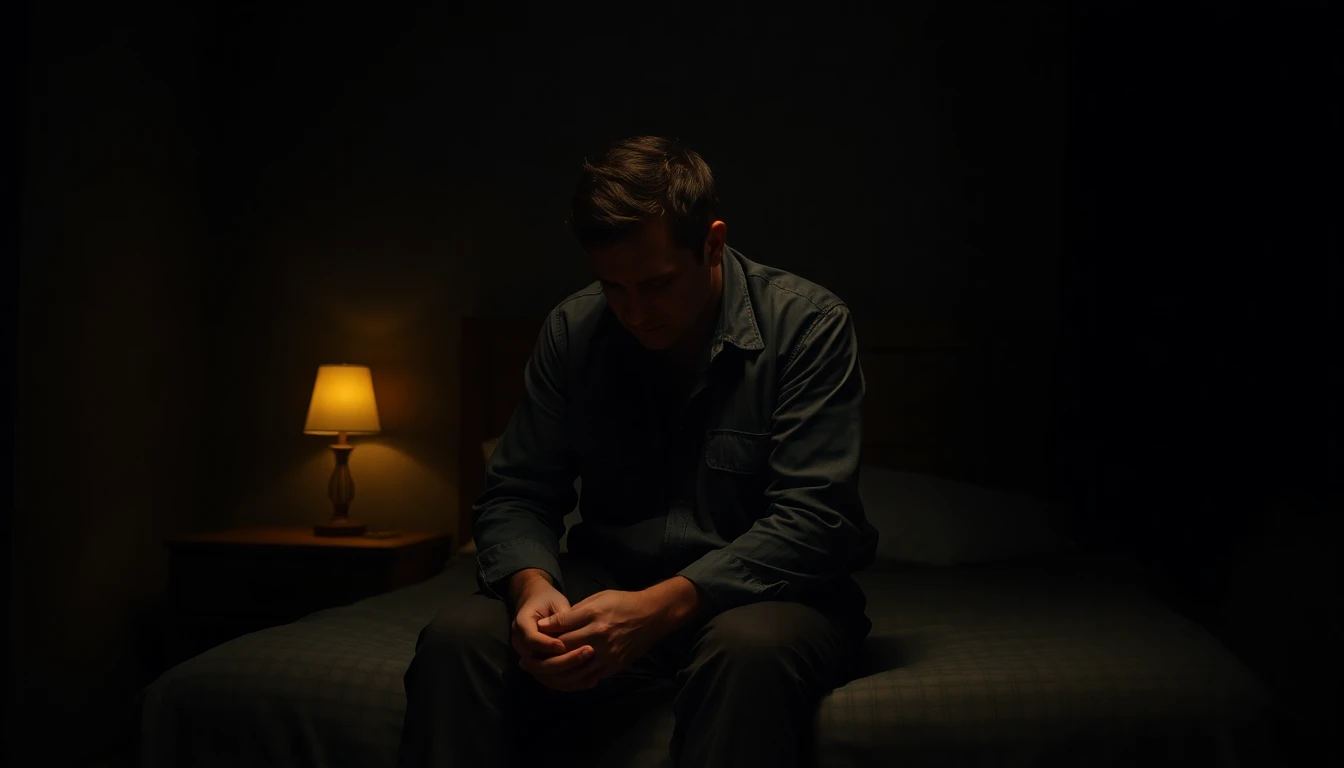
The other classic move is bottling it. Push it down, crack on, deal with it never. Trouble is, feelings don't evaporate when you ignore them. They leak out sideways — short fuse, headaches, dodgy sleep, extra beers, going quiet on everyone. Black Dog Institute research on men's mental health keeps landing on the same finding: blokes who can't put words on what they're feeling are slower to notice when something's wrong, and slower to get help. Bottling isn't toughness. It's just delay, with interest.
Key point: Bottling it isn't toughness. Feelings don't evaporate when you ignore them — they leak out sideways as a short fuse, bad sleep and extra beers.
Two things worth knowing straight up:
- Naming a feeling actually changes it. When you put words on an emotion — even just to yourself — the thinking part of your brain comes online and the alarm part settles. Researchers call it "name it to tame it". You can call it getting a grip.
- This is learnable at any age. Forty years of "fine, mate" doesn't disqualify you. The skill builds the same way at 45 as it does at 15 — with practice.
Signs to look for
How do you know if your emotional toolkit could use some work? Have an honest look:
The anger funnel
- Almost every uncomfortable feeling comes out as irritation or anger
- You go from "fine" to furious with nothing in between
- After you blow up, you often realise the thing you exploded about wasn't really the thing
The shutdown
- When someone asks what's wrong, the honest answer is you genuinely don't know
- "I'm fine" is your answer to everything, including things you're clearly not fine about
- You go quiet and pull away instead of saying what's up
The leak
- Tension shows up in your body instead — clenched jaw, tight shoulders, gut trouble, rubbish sleep
- You need a few drinks before you can talk about anything real
- You keep the conversation on footy, work and the weather, even with your closest mates
The cost
- Your partner says things like "I never know what's going on with you"
- Small frustrations build up for weeks, then come out all at once over something tiny
- You feel flat or wound up and can't explain why
None of this makes you a bad bloke. It makes you a bloke who was never shown how. If a few of these sound familiar, the rest of this page is the how.

What to do right now
You don't need a course or a couch. Here's the starter kit — things you can do today:
- Name it, even badly. Next time something's off, ask yourself: "What is this, actually?" Pick from a starter list: angry, stressed, worried, flat, embarrassed, hurt, knackered. Wrong guesses are fine — you're building the muscle. Saying "I'm wound up about that meeting tomorrow" beats stewing in vague crap all night.
- Take the pause. The gap between feeling something and reacting to it is where all your power is. Before you fire back — at your partner, your kid, the bloke in the group chat — take one slow breath and ask: "What's actually going on here?" Six seconds. That's roughly how long the first chemical surge of anger takes to pass. Wait it out, then respond.
- Look under the anger. When you notice you're angry, treat it like smoke and look for the fire. Ask: "What happened just before this? Am I actually hurt? Scared? Embarrassed?" Half the time, anger is the bodyguard standing in front of something softer. Talk to the something softer.
- Say one true sentence out loud. To your partner, a mate, or MensLine on 1300 78 99 78 — free, 24/7, blokes who get it. "I've been carrying a fair bit lately" is a complete sentence. You don't need to deliver a TED talk. One true sentence opens the door.
- Write it down if saying it's too much. Two minutes on your phone notes: what happened, what you felt, what you did. Nobody ever has to see it. It still works.
What not to do: don't drink to flatten a feeling. Alcohol is emotional duct tape — it holds for an hour and makes the whole thing messier tomorrow.
Key point: Naming a feeling actually settles it — 'name it to tame it'. Bottling it isn't toughness, it's just delay, with interest.
What to do over time
The in-the-moment stuff is the warm-up. This is the actual training program:
- Do a daily check-in. Once a day — in the shower, on the drive home — ask yourself "what am I feeling, and what's that about?" Thirty seconds. That's one rep. Do it daily and within a month you'll notice feelings earlier, before they're driving the car.
- Grow your vocabulary past "fine" and "annoyed". "Stressed" might actually be overwhelmed, dreading something, or stretched too thin. The more precise the word, the more useful the information. There's a difference between "annoyed" and "disrespected" — and they need different fixes.
- Practise on the small stuff. Don't make your first feelings conversation the giant one about your marriage. Start small: "Honestly, that job today frustrated the hell out of me." Low stakes, real rep.
- Find your format. Plenty of men talk better side-by-side than face-to-face. In the car, on a walk, fishing, at the gym. There's no rule that says real conversations need eye contact and a quiet room. Use whatever works.
- Watch your own patterns. Notice what reliably winds you up and what flattens you. Hungry, tired, hungover and over-caffeinated all shrink your fuse. Half of emotional intelligence is just knowing your own operating manual.
- Listen better, talk easier. EQ isn't just reading yourself — it's reading the room. When a mate's off, try "you don't seem yourself lately" instead of nothing. The blokes who can do this become the mates everyone trusts.
- Try a free online program. Beyond Blue and ReachOut have free, anonymous tools on handling emotions and tough conversations you can start tonight, no appointment needed.
Pick one. The daily check-in is the best bang for buck. It's the push-up of emotional fitness.
Where to get help
If the bottling has been going on for years, or what's underneath the anger feels too big to sort alone, getting a professional in your corner is a smart move — and it's simpler and cheaper than most blokes think.
Step 1 — Book a longer appointment with your GP. Ask for a long appointment for a mental health chat. You don't need a speech. "I've got a short fuse, I bottle everything, and it's affecting things at home" is plenty. GPs hear this from men every single week.
Step 2 — Ask about a Mental Health Treatment Plan. Your GP can set up a GP Mental Health Treatment Plan — the key that unlocks Medicare-rebated sessions with a psychologist, a set number of subsidised sessions each year (your GP can explain how many you can get). Depending on the psychologist, sessions are bulk-billed (free) or partly rebated. Healthdirect explains how the plan works.
Step 3 — Find a psychologist. Your GP will usually refer you. You can also search through Medicare Mental Health — the government's finder for local and online services — or call them on 1800 595 212 (free). And no, psychologists aren't just for crises. Plenty of men see one specifically to work on anger and communication — think of it as coaching, because that's basically what it is.
Any time, free, 24/7:
- MensLine Australia — 1300 78 99 78 — counselling for men, by phone or online chat, great for exactly this stuff
- Beyond Blue — 1300 22 4636 — support and a steer in the right direction
- Lifeline — 13 11 14 — when things feel like too much
- 13YARN — 13 92 76 — for Aboriginal and Torres Strait Islander mob, run by mob
If money's tight, say so. Ask the GP about bulk-billing and ask Medicare Mental Health about free services. Cost should never be the reason you don't get help.
When it's an emergency
Sometimes what's been bottled up for years gets very heavy. If you're having thoughts of suicide, or you feel like you can't keep yourself safe, that's an emergency — and you deserve immediate help, right now.
- If life is in danger right now, call 000.
- Lifeline — 13 11 14 (24/7, call or text)
- Suicide Call Back Service — 1300 659 467 (24/7, specialised counsellors)
- 13YARN — 13 92 76 (24/7, Aboriginal & Torres Strait Islander crisis support)
- MensLine — 1300 78 99 78 (24/7, counselling for men)
You can also go straight to your nearest hospital emergency department and tell them how you're feeling. They deal with this every day, and they will help.
Reaching out when it's this heavy isn't weakness. It's the strongest, smartest thing a bloke can do — and things genuinely do get better with the right help.
Sources and further reading
- MensLine Australia — Men and emotions — practical info on how men experience and express emotions. mensline.org.au
- Beyond Blue — plain-English info on anger, emotions and men's mental health. beyondblue.org.au
- Black Dog Institute — Men's mental health — the research on why men delay help-seeking and what works. blackdoginstitute.org.au
- ReachOut Australia — free tools for understanding and managing emotions. au.reachout.com
- Healthdirect — Mental Health Treatment Plans — how the Medicare pathway works. healthdirect.gov.au
Did this help?
Last reviewed: June 2026 by B. Faulds. We re-check every page, link and phone number at least every six months.