Need help right now?
This information is general education only and is not a substitute for professional medical advice. If something here rings true for you, the best next step is a chat with your GP — and if you're in crisis right now, call Lifeline on 13 11 14, or 000 if life is in danger.
If you're not sure whether it's serious enough to get help, get help anyway.
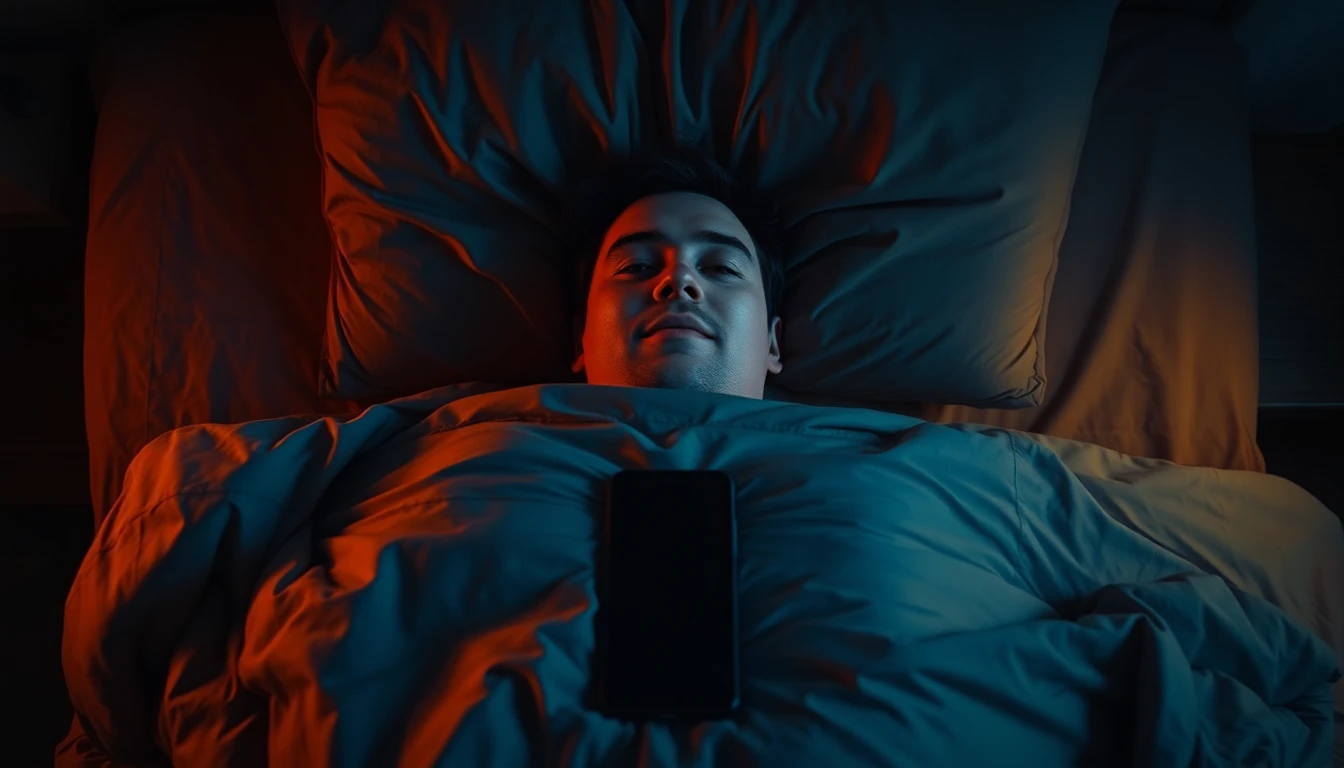
You know the drill. It's 2am, you're staring at the ceiling, and your brain won't shut up. Work stuff, money stuff, that thing you said three years ago — all of it queued up and playing on a loop. Then the alarm goes off and you drag yourself through another day on fumes, telling yourself you'll catch up on the weekend. You don't.
If that's you, you're not weak and you're not broken. Sleep problems are one of the most common things blokes deal with, and one of the least talked about. We treat running on empty like a badge of honour — "I'll sleep when I'm dead" — while it quietly chews through our mood, our patience and our health.
Here's the good news, and it's real: sleep is one of the most fixable things in mental health. Most blokes who actually work on it get better, often within weeks. You don't need to overhaul your whole life. You need to understand what's going on and make a few stubborn, boring changes. This article walks you through it.
What's actually going on?
Sleep and your head are a two-way street, and traffic runs both directions.
Go a few nights short on sleep and you'll notice it fast: you're flat, foggy, short-fused. Things that normally roll off your back get under your skin. Keep it up for weeks and it gets heavier — poor sleep drags your mood down, wrecks your focus, and makes anxiety and depression both more likely and harder to shake. A tired brain is a brain with no shock absorbers.
It runs the other way too. If you're stressed, anxious or low, your brain treats bedtime as its big chance to chew over every problem you've got. You lie down, the lights go off, and the committee meeting in your head comes to order. Stress hormones keep your body revved when it should be winding down. So worry wrecks sleep, and wrecked sleep feeds worry.
That's the loop. The important bit: a loop can be broken from either end. Fix the sleep and the mood often lifts. Treat the anxiety or low mood and the sleep often comes good. You don't have to solve everything at once — you just have to get a foot in the door somewhere.
A few things hit men especially hard:
- Shift work and FIFO. Rotating rosters, night shifts and swing changes fight your body clock head-on. Your body never quite knows what time zone it's living in.
- Worry. Money, work, relationships, the kids. The racing mind at 2am is the classic.
- Screens in bed. The phone keeps your brain switched on and the doomscroll never ends on its own.
- Grog. Here's the trap — alcohol knocks you out fast, so it feels like it helps. But it wrecks the back half of the night. You sleep light, wake more, and miss the deep sleep that actually restores you. A few beers to "help you sleep" usually means waking at 3am with your heart going.
- Sleep apnoea. Your airway partly closes while you sleep, so you stop breathing for short stretches, over and over, all night. It's very common in men — especially if you snore loudly or carry a bit of extra weight — and most blokes who have it don't know. You can spend eight hours in bed and still wake up wrecked.
Key point: Sleep and your head run both ways — bad sleep wears down your mood, and a flat mood wrecks your sleep.
Signs to look for
- Taking ages to get to sleep, night after night
- Waking at 3am wired, brain instantly at full speed
- Lying there with a racing head that won't switch off
- Knackered all day, no matter what you do
- Leaning on coffee or energy drinks just to function
- Nodding off in the arvo — on the couch, at your desk, in front of the telly
- Snapping at your partner, kids or workmates over small stuff
- And this one matters: loud snoring, gasping or choking sounds in your sleep, and still feeling tired after a "full night". That's the classic pattern for sleep apnoea. It's very common in men, it's very treatable, and it's worth a GP visit. Often it's a partner who notices it first — if someone's mentioned your snoring, take it seriously.
One or two rough nights is just life. The same signs week after week means it's time to do something.
Key point: Sleep is one of the most fixable things in mental health — most blokes who work on it get better, often within weeks.

A bloke who's been there
Robbo, Perth
What it was like. What changed. What's different now. · 1:25
An illustrated story produced by mentalhealth.men — a true-to-life account, not a real individual.
What to do right now
You can start tonight. None of this is fancy — it works because it's boring and you do it anyway.
- Pick a wake-up time and stick to it. Even on weekends, even after a bad night. A steady wake-up time is the anchor your whole body clock hangs off. This is the single most powerful change you can make.
- Get outside in the morning light. Ten or fifteen minutes of daylight soon after you wake — coffee on the back step, walk the dog. It tells your body clock what time it is.
- Cut the caffeine after lunch. Coffee and energy drinks hang around in your system for hours. That 3pm can is still in your blood at 9pm.
- Build a wind-down. Last half hour before bed, dial it down — shower, telly, book, music. You can't go from full throttle to asleep in five minutes. No one can.
- Phone out of the bed. Charge it across the room or in the kitchen. If it's in your hand at midnight, you've already lost. Buy a $15 alarm clock if you need to.
- Don't lie there stewing. If you've been awake more than about 20–30 minutes, get up. Go to another room, keep the lights low, do something dull until you're sleepy, then go back. Lying in bed wide awake for hours teaches your brain that bed is where the worrying happens — and you want bed to mean sleep.
- Watch the grog. You don't have to go dry. Just know that drinks close to bedtime trade a quick knockout for a wrecked second half of the night. Pull the last one earlier and notice the difference.
- Park the racing head on paper. If your brain saves its problem-solving for 2am, beat it to the punch: ten minutes in the evening, write down what's bugging you and one next step for each. Then it's handled — tonight, anyway.
Pick two or three. Run them for a couple of weeks before you judge them. Sleep responds to patterns, not one-offs.
Key point: The fixes aren't fancy. They work because they're boring and you do them anyway.
What to do over time
- If it's been weeks, see a GP. That's not over-reacting — that's how it's meant to work. Your GP can check what's underneath it, rule out the physical stuff, and point you to the right treatment.
- Ask about CBT-i. Cognitive behavioural therapy for insomnia is the gold-standard treatment for ongoing sleep problems — and it works better long-term than sleeping pills, because it retrains your sleep instead of papering over it. You can get it through a psychologist (your GP can set up a Mental Health Care Plan, which makes sessions cheaper), or through free and low-cost online Australian programs like This Way Up and MindSpot. You can do those from your phone, in your own time, no waiting room.
- Get the snoring checked. If you snore loudly, gasp at night, or wake unrefreshed, ask your GP about a sleep study. Treating apnoea can be life-changing — better energy, better mood, and it protects your heart too.
- Treat what's underneath. If anxiety, depression or chronic stress is driving the sleepless nights, dealing with that is part of fixing the sleep. The loop runs both ways, remember — your GP or a psychologist can help you work both ends at once.
- Go easy on the sleeping-pill route. If medication ever comes up, that's a conversation for your GP — not the servo shelf or a mate's leftovers.
When it's an emergency
Two situations where you stop and act today, not "when things settle down":
If you're so exhausted you're dangerous behind the wheel or on machinery. Nodding off driving, microsleeps on the highway, drifting at the controls — that's not pushing through, that's a serious risk to you and everyone around you. Don't drive. Tell your supervisor, tell your GP, and get it sorted before you get back behind the wheel.
If the low mood is taking you somewhere dark. Long-term sleeplessness can grind you down to a place where things look hopeless and you start having thoughts that scare you. That is a sign you need support right now — not toughing it out. If you're in immediate danger, call 000. Otherwise call Lifeline on 13 11 14, any hour, any night — including 3am when you're lying there awake. Reaching out at that point isn't weakness. It's exactly what a smart bloke does when the situation is serious.
Where to get help
- Your GP — first stop. Can check for sleep apnoea, refer you for a sleep study, set up a Mental Health Care Plan, and treat any anxiety or depression underneath.
- Sleep Health Foundation (sleephealthfoundation.org.au) — Australia's go-to for trustworthy, plain-English fact sheets on everything from shift work to apnoea.
- This Way Up (thiswayup.org.au) — Australian online CBT programs, including a dedicated insomnia course you do at your own pace. Free or low-cost.
- MindSpot (mindspot.org.au) — free online assessment and treatment for stress, worry and low mood, run by Australian clinicians.
- A psychologist for CBT-i — ask your GP for a Mental Health Care Plan referral.
- Healthdirect (healthdirect.gov.au) — government-backed health info and a 24/7 advice line on 1800 022 222.
- MensLine Australia — 1300 78 99 78, 24/7 phone and online counselling for men, any issue, no judgement.
- Lifeline — 13 11 14, 24/7 crisis support.
Sources and further reading
Did this help?
Last reviewed: June 2026 by B. Faulds. We re-check every page, link and phone number at least every six months.