Need help right now?
This information is general education only and is not a substitute for professional medical advice. If something here rings true for you, the best next step is a chat with your GP — and if you're in crisis right now, call Lifeline on 13 11 14, or 000 if life is in danger.
If you're not sure whether it's serious enough to get help, get help anyway.
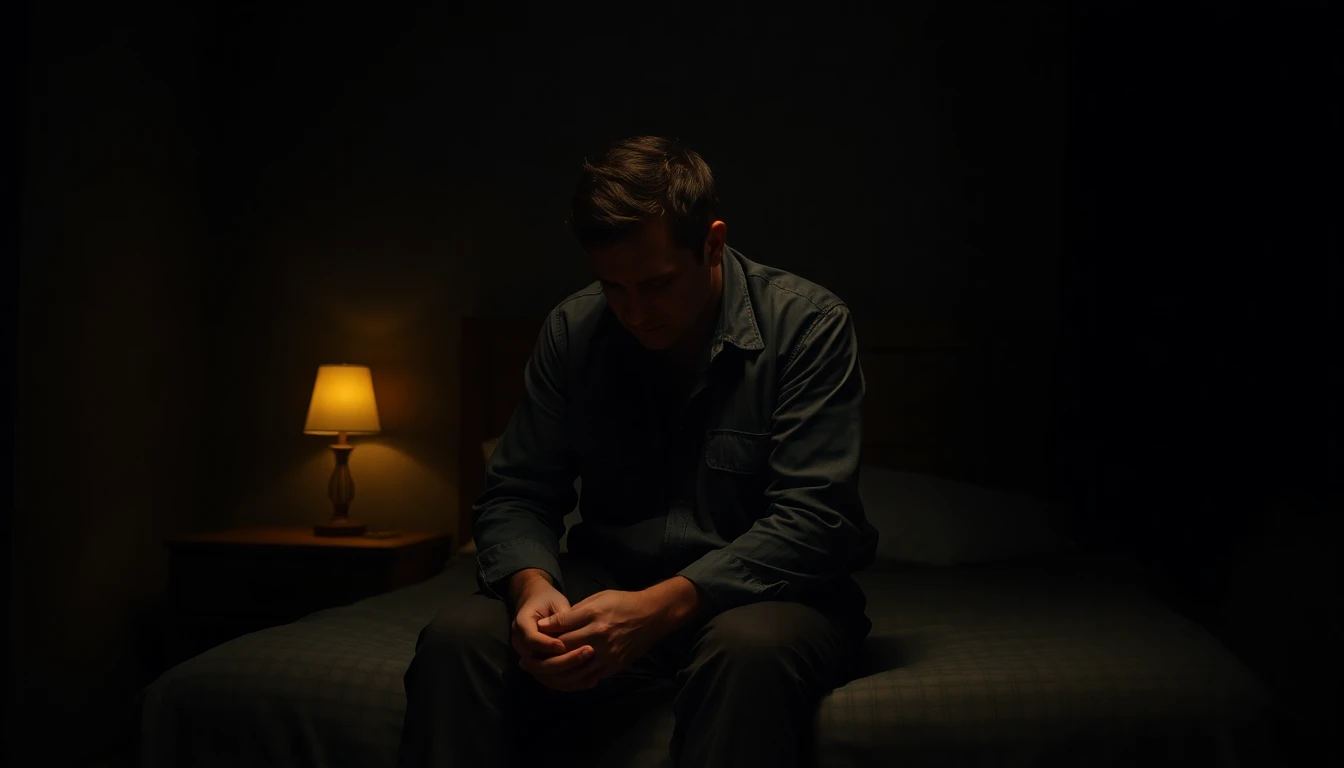
If you've lost someone — or something — and you're not travelling well, you're in the right place. Maybe you held it together for the funeral and now, months later, it's hitting you sideways. Maybe everyone else seems to have moved on and you haven't. Maybe you're not even sure you're "allowed" to be this gutted.
Grief isn't a mental illness. It's the normal human response to losing someone or something that mattered. GriefLine — Australia's dedicated grief support service — puts it simply: grief is the price of caring about things. There's no wrong way to feel it, and no schedule it's supposed to run on.
Key point: Grief is the price of caring about things. There's no wrong way to feel it, and no schedule it's supposed to run on.
But here's the thing about blokes and grief: a lot of us were never shown how to do it. So we go quiet, get busy, or get angry — and carry the weight alone. This page is about putting some of that weight down.
What's actually going on?
Grief is your whole system adjusting to a world that's suddenly different. It's not just sadness. It's shock, anger, guilt, numbness, relief, exhaustion — sometimes all in the same afternoon. Beyond Blue describes grief as coming in waves rather than neat stages. You don't "complete" the stages and graduate. The waves just get further apart, and you get better at riding them.
A few things worth knowing straight up:
Men often grieve by doing, not talking. Plenty of blokes process loss through action — sorting the estate, fixing up Dad's old ute, building something, going back to work. Researchers call this an "instrumental" style of grieving, and it's legitimate. You're not grieving "wrong" because you're not crying in front of people. The problem only starts when doing becomes avoiding — when you're flat out busy precisely so you never have to feel anything.
Key point: Men often grieve by doing, not talking — and that's legitimate. It only becomes a problem when ‘doing’ turns into ‘avoiding’.
Loss isn't only death. A marriage ending. Being made redundant from a job you had for twenty years. A health diagnosis that takes away the things you used to do. Retirement. The farm being sold. These are real losses, and they produce real grief — even though nobody sends you a card for them. If you've been flattened by one of these and told yourself "it's not like anyone died, get over it" — that's exactly the kind of thinking that keeps men stuck.
Losing someone to suicide is its own kind of grief. If you've lost a mate, a brother, a son or anyone else to suicide, the grief often comes with extra layers — shock, endless "why" questions, guilt about what you did or didn't notice, and an awkward silence from people who don't know what to say. None of what happened was your fault. There's a free national service built exactly for this: StandBy Support After Suicide supports people bereaved by suicide, and they understand the territory better than anyone.
Sometimes grief gets stuck. For most people, grief slowly softens over months. For some — a smaller number of people — it doesn't shift. If it's been a year or more and the grief is still as raw as week one, dominating every day and stopping you living, that can be something called prolonged grief, and it responds well to professional help. Not because you loved them too much. Because grief, like anything, can sometimes need a hand.
Signs to look for
Grief in men often doesn't look like crying. Have an honest look at this list:
- Throwing yourself into work or projects so hard there's no room to feel anything
- A short fuse — anger that surprises you, often at small things
- Drinking more, especially alone or to get to sleep
- Feeling numb or flat — "I should be sadder than this, what's wrong with me?"
- Avoiding places, songs, photos, or people connected to the loss
- Avoiding people altogether — declining invites, going quiet in group chats
- Trouble sleeping, or sleeping all the time
- Aches, tight chest, no appetite, getting sick more often — grief is physical
- Guilt loops: replaying conversations, "I should have called more," "I should have noticed"
- Feeling like life has lost its point
And some signs grief might be stuck rather than moving:
- It's been over a year and the pain is as intense as the first weeks
- You can't accept the loss is real, or you've built your whole life around avoiding reminders of it
- You feel life is meaningless without them, most days
- Mates and family have gently said they're worried about you
None of this means you're broken. It means you're carrying something heavy, probably alone, and it's time to share the load.

What to do right now
If grief is hammering you today, here are some circuit breakers. They won't fix it — nothing "fixes" grief — but they help you get through the day in front of you.
- Call GriefLine on 1300 845 745. It's free, and it exists precisely for this. You don't need a crisis or a script. "My dad died four months ago and I'm not doing great" is a complete sentence. They'll take it from there.
- Let the wave come. When grief hits, the instinct is to clamp down. Try the opposite — give it ten minutes. Sit in the ute, let it move through you. Waves pass faster when you stop fighting them.
- Do one physical thing. Walk, swim, chop wood, wash the car. Grief sits in the body, and moving the body genuinely helps shift it.
- Tell one person the truth. Not "yeah, getting there." Try "honestly, today's a rough one." You'll be surprised how often the other bloke says "yeah, I've been there."
- Eat something and drink water. Sounds stupidly basic. Grieving people forget, and running on empty makes every feeling worse.
- Park the big decisions. Selling the house, quitting the job, ending the relationship — if you can, give it six months. Grief is a terrible adviser.
What not to do: don't pour grog on it. Alcohol numbs the wave tonight and doubles it tomorrow, and it wrecks the sleep you badly need.
Key point: Grief is the price of caring about something — there's no wrong way to feel it, and no schedule it's meant to run on.
What to do over time
Grief doesn't get smaller. You get bigger around it. These things help that happen:
- Keep doing — but add some talking. If you process things through action, use it. Build the memorial bench. Finish his shed. Run the charity ride. Just make sure somewhere in the week there's also a person you're honest with, even briefly.
- Talk side-by-side, not face-to-face. Most men talk better while doing something — driving, fishing, walking, working. If sitting down for a Deep Conversation sounds awful, don't. Invite a mate to help you with a job instead.
- Mark the dates. Birthdays, anniversaries, Father's Day — they'll hurt whether you plan for them or not. Planned hurts less. Do something deliberate: visit the grave, cook their favourite meal, raise a glass (one), tell a story about them.
- Let the good days in without guilt. Laughing at the pub three months after the funeral isn't betrayal. It's recovery. The person you lost would not want your misery as a tribute.
- Look after the machine. Sleep, food, movement, sunlight. Grief is a marathon and you can't run it on no fuel.
- If the loss was a suicide, get specialised support. StandBy Support After Suicide offers free one-on-one support for as long as you need it. People bereaved by suicide do best with support from people who genuinely understand that grief — that's exactly what StandBy is for.
- If it's not shifting, get professional help. Grief counselling isn't lying on a couch talking about your childhood. It's practical help for carrying something heavy. If it's been many months and you're stuck — or the loss was sudden or traumatic — this is the move. The next section explains exactly how.
Where to get help
Here's how getting proper support works in Australia. It's simpler and cheaper than most blokes think.
Step 1 — Book a longer appointment with your GP. Ask for a long appointment for a mental health chat. You don't need a speech. "My brother died last year and I'm not coping" is plenty. GPs see grief every single week — you will not shock them.
Step 2 — Ask about a Mental Health Treatment Plan. Your GP can set up a GP Mental Health Treatment Plan, which unlocks Medicare-rebated sessions with a psychologist — a set number of subsidised sessions each year (your GP can explain how many you can get). Some psychologists bulk-bill (free), others charge a gap. Healthdirect explains how the plan works.
Step 3 — Find the right person. Your GP will usually refer you, and you can ask for someone experienced in grief and bereavement. You can also search through Medicare Mental Health or call them free on 1800 595 212 and they'll point you to local and online options.
Any time, free:
- GriefLine — 1300 845 745 — Australia's grief and loss support line
- StandBy Support After Suicide — free, specialised support if you've lost someone to suicide — standbysupport.com.au
- Beyond Blue — 1300 22 4636 — 24/7 support if grief has slid into depression or anxiety
- MensLine Australia — 1300 78 99 78 — 24/7 counselling for men, phone or online chat
- 13YARN — 13 92 76 — 24/7, for Aboriginal and Torres Strait Islander mob, run by mob
If money's tight, say so. Ask the GP for bulk-billing options. The phone lines above are free, every time. Cost should never be the reason you carry this alone.
When it's an emergency
Grief is heavy, and sometimes it slides somewhere darker. If you're having thoughts of suicide, or you feel like you can't keep yourself safe — that's an emergency, and you deserve help right now, not after the weekend.
Urgent signs to act on: feeling like the people you love would be better off without you, thinking about ending your life, feeling completely hopeless, or being unable to keep yourself safe.
- If life is in danger right now, call 000.
- Lifeline — 13 11 14 (24/7, call or text)
- Suicide Call Back Service — 1300 659 467 (24/7, specialised counsellors)
- MensLine Australia — 1300 78 99 78 (24/7, counselling for men)
- 13YARN — 13 92 76 (24/7, Aboriginal & Torres Strait Islander crisis support)
You can also go straight to your nearest hospital emergency department and tell them how you're feeling. They deal with this every day, and they will help.
Reaching out when it's this heavy isn't weakness. It's the strongest thing a grieving bloke can do — and it genuinely does get better with the right help.
Sources and further reading
- GriefLine — Australia's grief and loss support service, including resources on how grief works. griefline.org.au
- Beyond Blue — Grief and loss — plain-English overview of grief and when to get extra help. beyondblue.org.au
- StandBy Support After Suicide — free national support for anyone bereaved by suicide. standbysupport.com.au
- Healthdirect — Grief and loss — government health info, including the Medicare pathway to counselling. healthdirect.gov.au
- MensLine Australia — men's counselling, 24/7, phone and online. mensline.org.au
Did this help?
Last reviewed: June 2026 by B. Faulds. We re-check every page, link and phone number at least every six months.